



Recently, I’ve heard some rather spicy comments about Nollywood’s latest goldmine—the YouTube film industry. Some folks have slapped a “bad and poor quality” label on all YouTube films. A few Popcorn Tens ago, GrandPrince lamented about the agony of trying to watch a YouTube film only to find plot holes so big they could make a Yeezy shirt jealous.
He also mentioned how filmmaking mirrors Nigeria. With YouTube being the world’s most accessible platform, he urged creators to stop churning out mid-films revolving around the same three themes: love, money, and the ever-popular Cinderella story of low-class girl meets high-class guy, or the other way around.
It’s funny, really—who doesn’t want love or money? And honestly, I wouldn’t mind a high-class romance myself. We’ve all had those wild dreams: waking up one morning to discover you’re Dangote’s child. That’s the first reason these stories sell—relatability, and for those who can’t relate, there’s always wishful thinking and plenty of “If na me ehn!” flying around.
But that’s beside the point. Are YouTube films as bad and unwatchable as people say? And if they’re so bad, why are millions of Nigerians watching them? And more intriguingly, why are your favourite actors and producers fighting tooth and nail to break into this market?
First, let’s talk about YouTube—a free video-sharing platform owned by Google, launched in 2005, and accessible worldwide. It’s the second most-visited website after Google Search. In 2023, YouTube generated over $30 billion in revenue. Back in 2013, it was $3.1 billion. Imagine what the revenue will be in another ten years. As of 2022, with only 6.69 million users in Nigeria, the percentage of YouTube channels making seven figures or more in revenue (Naira) was up over 60% year-over-year. Now, with over 10 million users, just imagine the dough creators are raking in.
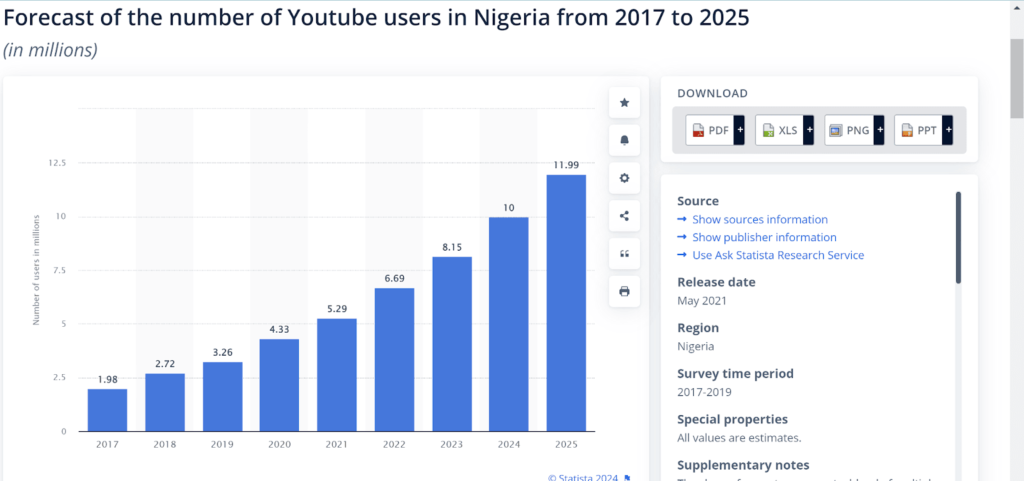
Source: Statista
So, why are all our faves flocking to YouTube? Simple: MONEY! More followers, subscribers, and views equals more money. Longer content? More money. Frequent content? You guessed it—more money!
So, let’s talk about that for a bit.
Producing films in Nigeria is expensive. Making a standard cinema film costs a lot, and returns are uncertain. If you’re not EbonyLife, Funke Akindele, or don’t have big names like Timini Egbuson, RMD, Shaffy Bello, or Adesuwa Etomi, your chances of breaking even in the cinema business are slim to none. But on YouTube, anyone—literally anyone—can make a film. If it’s good and people like it, you can make way more than you spent.
Most YouTube films are low to mid-budget, but that’s changing with big actors like Etim Effiong and Bimbo Ademoye now gracing the YouTube scene. Big producers like Omoni Oboli and Ruth Kadiri also have YouTube channels. YouTube is a low-hanging fruit for Nigerian filmmakers—they grab it, eat the hell out of it, and get paid heavily for it.
Yes, they’re there for the money. But it’s not merely the money they get from streams and ads right now. I reckon they are thinking long-term. YouTube has been around for almost 20 years already, and is owned by one of the biggest tech enterprises in the world, Google, it doesn’t seem to be going anywhere, anytime soon. So, getting into this market at this time is such a good investment. Imagine what they would be making in 10 years. It’s the same as people investing in the Afrobeats industry right now.
Now that you know why your faves are hell-bent on breaking into the YouTube market, I’m about to tell you why everyday Nigerians like me and you consume so much YouTube content – enough to make these people rich.
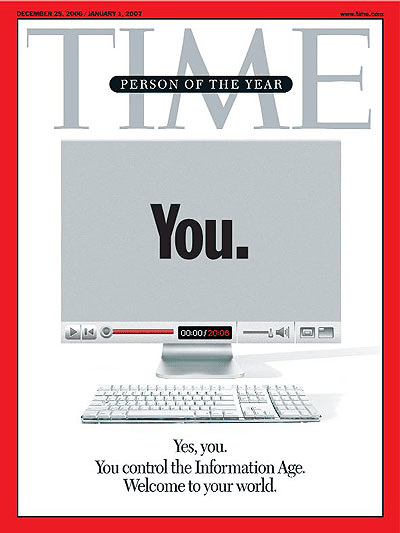
As of 2022, 650 Nigerian YouTube channels had over 100,000 subscribers, and 35 channels had over one million subscribers. 500 hours of content are uploaded on YouTube every minute! YouTube is practically the digital content bank of the globe. In 2006, Time magazine featured YouTube on its Person of the Year cover. The person in question was ‘you,’ specifically content creators, with the cover featuring a mirror instead of YouTube itself.
This was so brilliant because that’s what it is – YouTube is that personalised. It is about you and me and all of us. It is the peak of social connection, if you ask me.
So, why would Nigerians rather watch YouTube than go to the cinema? The reason is that YouTube movies have reminded Nigerians of their first love before cinema became such a big deal – the home video era, where films used to be mass-produced in VHS and DVDs and sold for cheap with extra large titles on the covers – “BEYONCE VS RIHANNA” when it’s really just Nadia Buhari and Omotola’s face-off. The times you could play a CD or a DVD until the movie cracked.
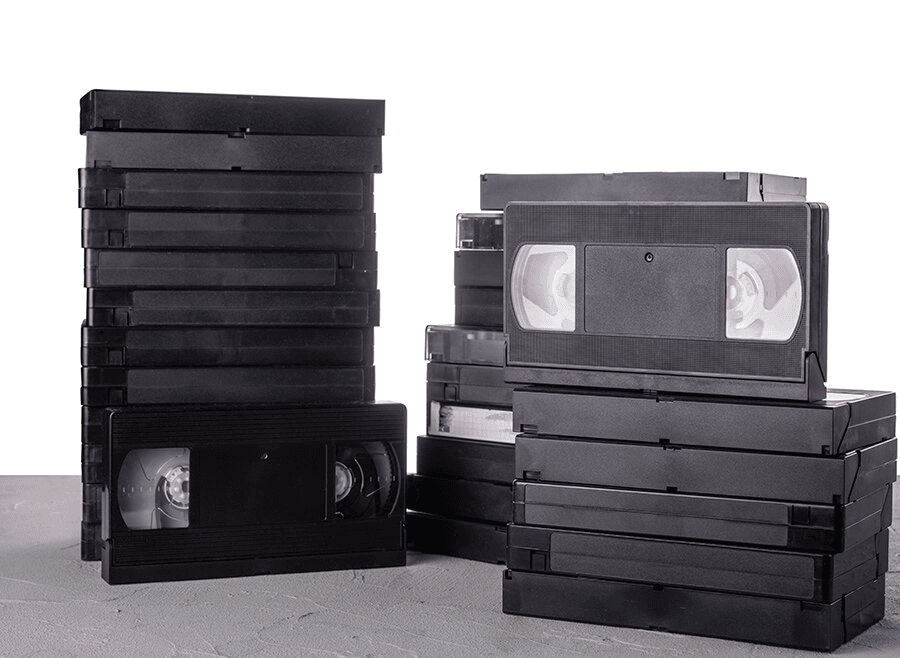
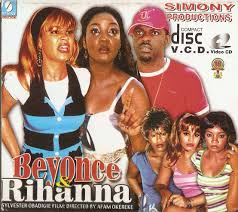
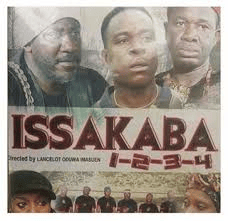
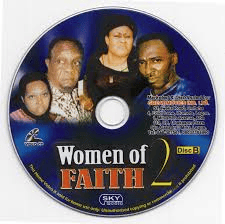
This was the era where kids who didn’t have video players at home stood around that one neighbour’s window, watching films.
It’s the same advantage that other streaming platforms like Netflix, Prime and Showmax have over Cinema, but the difference is that YouTube is the cheapest of all these options. Netflix for example, only this year has increased their subscription prices twice.
The average Nigerian craves entertainment and they will get it no matter what. With a minimum wage of less than 100,000 Naira, how many Nigerians can truly afford to pay thousands monthly for a subscription? And why would they pay for that when they can easily download YouTube for free and have hundreds of movies at their disposal?
So, who cares if the stories aren’t quite hitting the mark, really, right? Just as long as it satisfies the audience it was made for in the first place. Apart from Nigerians here, Nigerians in the diaspora and people from other countries can also easily access these movies without needing a paid subscription.
But here’s what I think. YouTube has hundreds of Nollywood movies produced every year. It’s unlikely that every single one of them is badly written and produced. YouTube still has gems, just as Netflix, Prime, or cinemas have their share of epic fails. I may not consume a lot of YouTube content, but these creators are definitely doing something right. They’re building their own empires instead of waiting for a seat at the table.
The community in the Nollywood YouTube scene is also truly formidable. They are a new Nollywood industry on their own. They have their stars in the likes of Chike Dike, Maurice Sam, Ego Nwosu, Uche Montana, Sandra Okuzua, Onyi Alex, Chinenye Nnebe, Miwa Olorufemi and Too Sweet Anaan, to mention a few.
As a movie lover, I enjoy the cinema experience and the progression of Nollywood films like “Mami Wata” winning big internationally. But I also appreciate this new industry on YouTube. It shows that our market is growing on all sides. Cinema and YouTube can coexist. We can watch “A Tribe Called Judah” in the cinemas and return home to catch a new Uchenna Mbunabo film.
We get the best of both worlds because… why not?
