


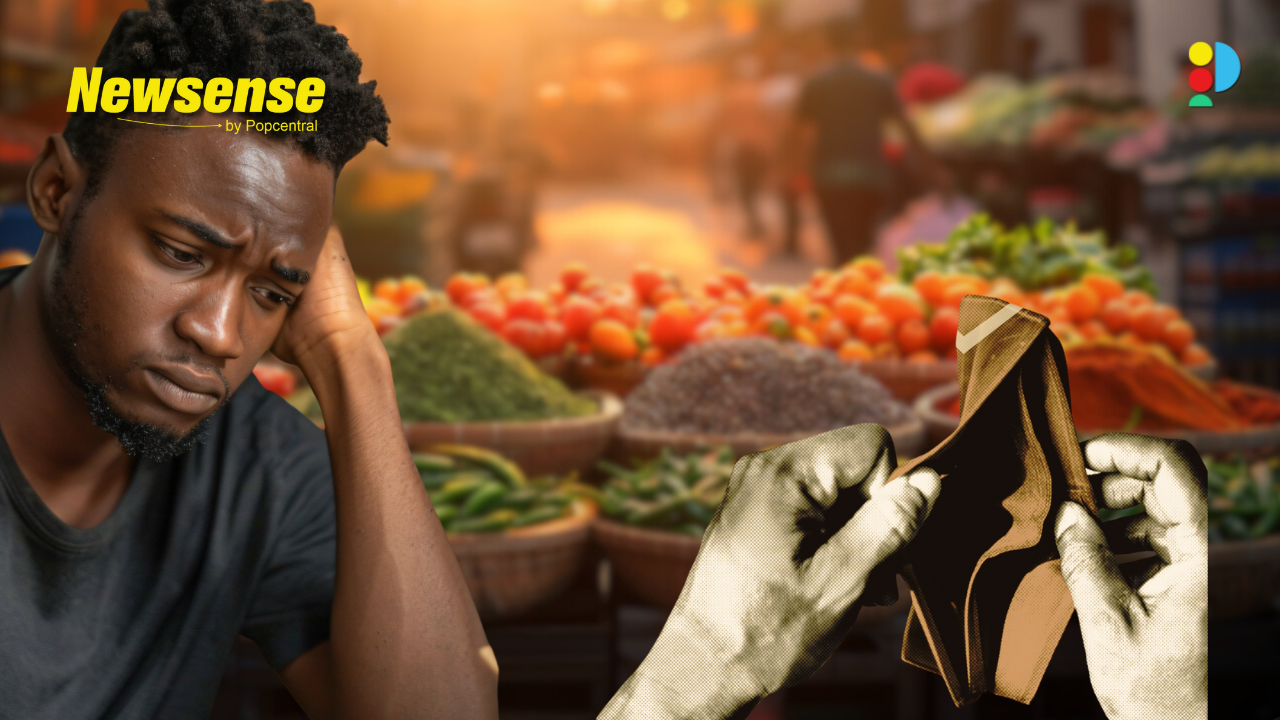
If you live in Nigeria — or have family there — you don’t need a World Bank report to tell you life is getting expensive. You just need to walk into a market. A bag of rice now sells for ₦100,000. A litre of petrol? ₦845. These aren’t just numbers in the news; they’re the daily reality of millions.
Behind these price hikes is a ruthless economic force: inflation. Economists call it “the rate at which prices rise over time.” Nigerians know it as the silent thief that makes your salary feel smaller each month, erodes your savings, and turns basic comforts into luxuries.
The Harsh Numbers
As of mid-2025, Nigeria’s headline inflation is at 22.22% — already one of the highest in the world. But the real sting is in food inflation at 21.97%, meaning that staples like garri, yam, and beans cost almost a quarter more than they did last year. Core inflation — which strips out volatile items like food and fuel — sits at 22.76%, proof that this problem is baked deep into the economy.
Why Prices Keep Rising
Several forces are feeding this inflationary fire — and they’re interconnected in ways that make quick fixes nearly impossible.
1. A Weakening Naira
Nigeria imports far more than it produces. Every time the Naira loses value, the cost of those imports — from machinery to pharmaceuticals — jumps. Businesses pass the higher costs on to customers, and the spiral continues.
2. Fuel Subsidy Removal
When the government scrapped the fuel subsidy in 2023, transport costs shot up overnight. From farm trucks to city taxis, every extra naira spent on fuel found its way into the prices of goods and services.
3. Insecurity in Food-Producing Regions
Conflict and banditry in key farming areas have displaced thousands of farmers. Crops rot in fields that no one can safely reach. The result? Artificial scarcity that keeps food prices high no matter what the Central Bank does.
4. Policy Missteps
Years of printing money to cover budget deficits have left too much cash chasing too few goods. It’s Economics 101 — and a recipe for persistent inflation.
How It’s Hitting Nigerians
The consequences are brutal. Poverty rates have jumped from 40% in 2018 to 46% in 2023. Families skip meals to make ends meet. Savings accounts are quietly bleeding value.
Small and medium-sized enterprises (SMEs), which employ 84% of Nigeria’s workforce, are squeezed from both sides — facing skyrocketing operational costs and customers who can’t afford to spend. Many are shutting down, cutting jobs, or scaling back operations.
For the Nigerian diaspora, the impact is indirect but real. Remittances now cover less back home, meaning families require more support just to maintain the same standard of living.
The Way Out: Produce, Don’t Just Consume
The Central Bank’s answer has been to raise interest rates — but that’s like trying to put out a forest fire with a bucket of water. The real solution is structural: Nigeria must produce more of what it consumes.
Countries like Vietnam have shown what’s possible, transforming from import-dependent economies to global manufacturing hubs within a generation. Nigeria can follow suit by:
- Investing heavily in power and transport infrastructure.
- Building value-added industries in agriculture and manufacturing.
- Supporting SMEs with affordable financing.
- Ensuring stable, long-term policies that survive election cycles.
Why This Matters for Nigerians Abroad
A productive Nigeria means a stronger Naira, better investment opportunities, and — most importantly — a country worth returning to. For the diaspora, this isn’t just about patriotic pride; it’s about securing the long-term stability of the families and communities they support.
Until then, inflation will remain that silent thief — stealing purchasing power from wallets in Lagos, Kano, and Port Harcourt, and stretching the support systems of Nigerians living in London, Toronto, and Houston.
