


What your government doesn’t want you to know is happening right now, a quiet tax swap that could change everything from the price of bread to the cost of transport in Nigeria.
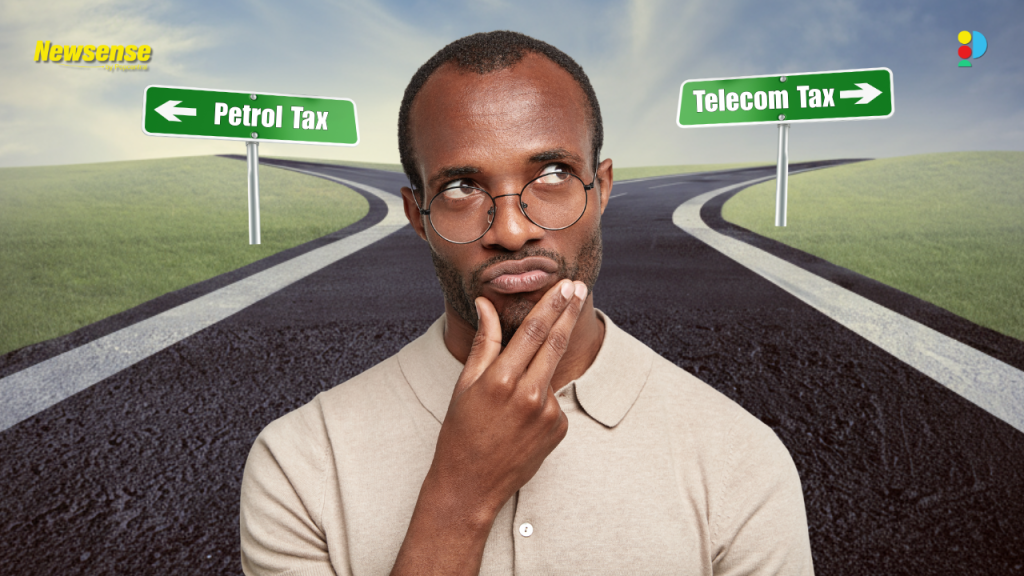
In a surprising fiscal twist, the government suspended a 5% telecom tax, only to replace it with a 5% excise duty on petrol and diesel. On paper, it looks like a harmless exchange. But beneath the surface lies a policy shift with serious consequences for businesses, households, and the cost of living.
Let’s break it down.
From a revenue perspective, the math makes sense, almost too much sense. The telecom tax, applied to Nigeria’s ₦6 trillion annual telecom spend by 110 million subscribers, would have generated around ₦297 billion. But the petrol tax? That’s a goldmine. With Nigerians consuming roughly 60 million litres of petrol daily, worth nearly ₦10 trillion yearly, a 5% duty could bring in ₦493 billion.
That’s an extra ₦200 billion in government revenue, a tempting fix for a nation battling one of the world’s lowest tax-to-GDP ratios. On spreadsheets, it’s a “smart move.”
But here’s what no one is telling you: economies don’t run on spreadsheets. They run on people. And people feel taxes in their kitchens, bus fares, and generator fuel costs, not in revenue reports.
While a telecom tax is a limited charge, contained, predictable, and mostly confined to your airtime or data bill, a petrol tax is a tax on life itself in Nigeria. It hits everything. Petrol powers our homes, fuels our transport, and drives our small businesses.
Add 5% to fuel prices, and you don’t just raise petrol costs, you ignite inflation. Transport fares go up. Food prices follow. Small business owners from barbers to printers to food vendors face higher operating costs, and have no choice but to pass it on to consumers.
The result? Every day, Nigerians pay more, especially the poor, who already spend most of their income on food and transport. It’s what economists call a regressive tax, one that takes more from those who have less.
Sure, Nigeria must raise revenue to fix roads, fund hospitals, and build schools. But the real question isn’t “Should we tax?” It’s “How should we tax?”
There’s a smarter way, hiding in plain sight: technology and data. The government’s NIN-SIM linkage has created one of Africa’s most comprehensive identity databases, tying over 100 million Nigerians to verified economic profiles.
Instead of punishing citizens through consumption taxes, the government could use this data to expand the tax net, bringing in informal businesses, traders, and artisans — those who earn but are outside the system. That’s a fairer, smarter approach that taxes income proportionally instead of survival essentials.
In the short term, the petrol tax may look like a quick win. But in the long run, it could fuel inflation, deepen poverty, and erode public trust.
What your government isn’t telling you is that a truly smart fiscal policy isn’t about taxing what people spend, it’s about empowering how they earn.
You can watch our YouTube episode for more:
Also read: The iPhone 17 Price in Nigeria
