


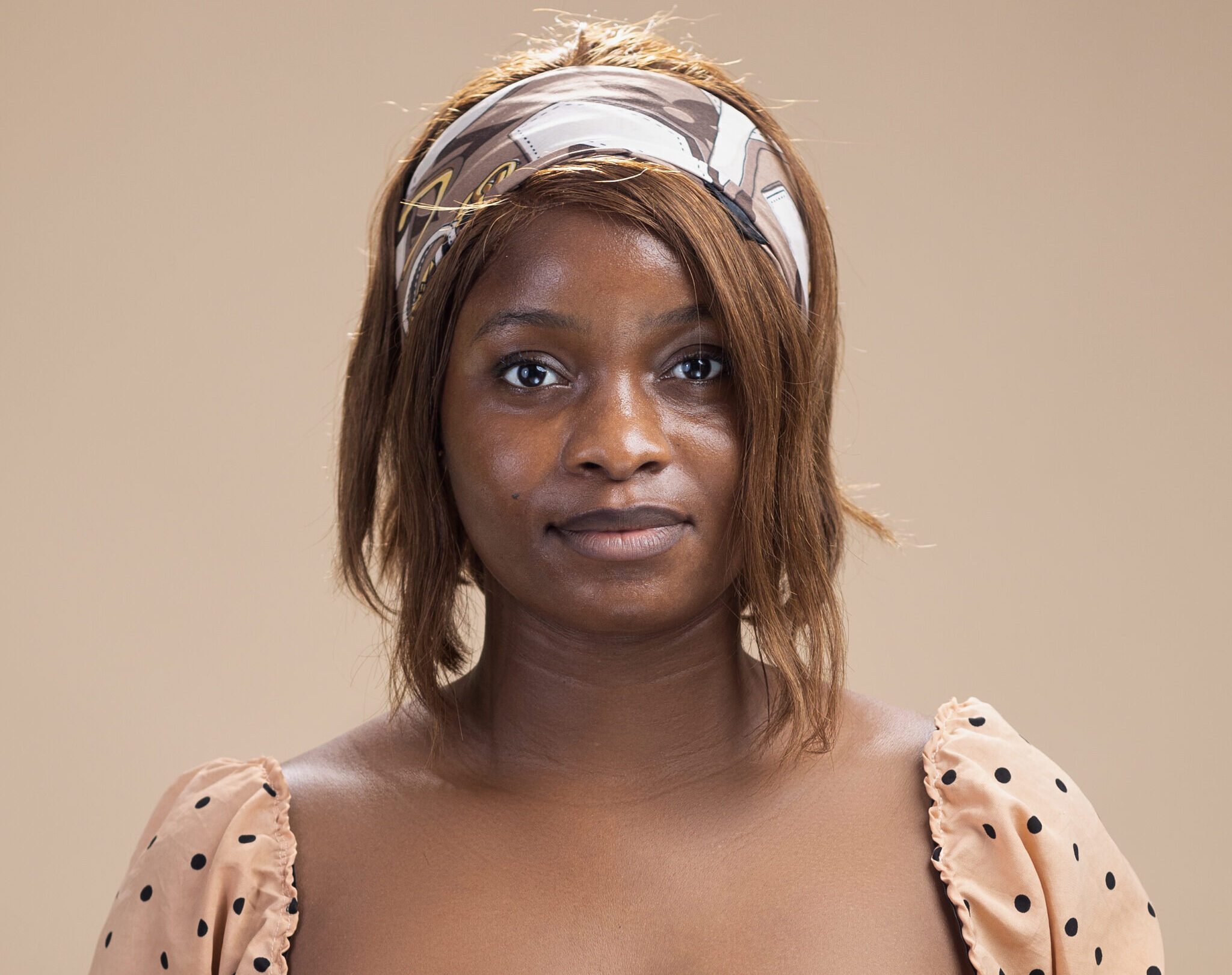
Kitan’s journey as an artist began in childhood, immersed in a highly creative environment. Growing up with a mother who was a fashion designer, Kitan had access to fabrics, tools, and materials that sparked early artistic experiments. “Those early experiences shaped my love for art and set the foundation for the artist I am today,” Kitan shares, reflecting on a youth filled with textures and endless possibilities.
For Kitan, art is not just a craft but a reflection of life itself. “Every event in my life has contributed to shaping my artistic style and vision—it’s deeply intertwined with my entire existence,” Kitan explains. A pivotal moment in their creative journey came when a friend introduced the concept of art as a community—where ideas and experiences are shared and grow collectively. “That perspective continues to influence how I approach my work and connect with others through it.”
Kitan’s art style is truly dynamic, as it explores optical illusions. Aside from art, Kitan spends time engaging in other hobbies, such as watching anime and movies. During one of our early conversations, we discussed anime, and finding a shared hobby was one of the highlights of the conversations we had during the residency program.
Participating in the ‘70 Years of Music in Nigeria’ Artist Residency has been a transformative experience for Kitan, allowing for both personal and professional growth. “It has pushed me to explore and boldly embrace a distinct style while navigating the challenges of turning an unfamiliar space into a productive and comfortable workspace,” Kitan says. The residency deepened their appreciation for the theoretical aspects of art, enriching their creative process and broadening their perspective.
For Kitan, the residency’s focus on Nigerian music has a special resonance. “I’ve always had a love for history, and my work consistently reflects that passion,” Kitan explains. “Being part of a residency that celebrates 70 years of Nigerian music is deeply meaningful to me, both personally and professionally. I’ve always wanted to contribute to something significant, and celebrating such a monumental milestone in Nigerian music is nothing short of amazing.”
Kitan’s work at the residency delves into the profound relationship between music and the human experience. “Through the pieces I’ve created here, I hope to convey how musical rhythms reflect the emotional and cultural essence of Nigeria,” Kitan explains. “My work explores how this musical journey parallels the human experience, where multiple realities coexist, memories shape identity, and growth remains a dynamic, ever-evolving process.”
The residency has also fostered a sense of community and collaboration. “Sharing spaces with other artists, engaging in discussions, and collectively celebrating Nigerian music has expanded my understanding of music, sharpened my research skills, and deepened my artistic knowledge,” Kitan shares.
However, Kitan is no stranger to challenges. “One of the challenges I’ve faced as an artist in Nigeria is losing both my old and new Instagram accounts,” Kitan laments, recognizing the platform’s significance in accessing opportunities and showcasing work. Despite this, Kitan remains focused on growth and perseverance, navigating the unique constraints of Nigeria’s art scene with determination.
Kitan’s style specializes in surreal compositions and optical illusions, reflecting themes of growth, identity, and depth. This approach aligns seamlessly with their love for history. “There is no present without the past, and the past shapes the present,” Kitan emphasizes. By capturing the historical and cultural impact of Nigerian music, Kitan’s work bridges the past and present, using music as a medium for storytelling, social commentary, and community connection.
Through surreal and symbolic storytelling, Kitan continues to grow, her art is an ode to the power of creativity, history, and collaboration.
